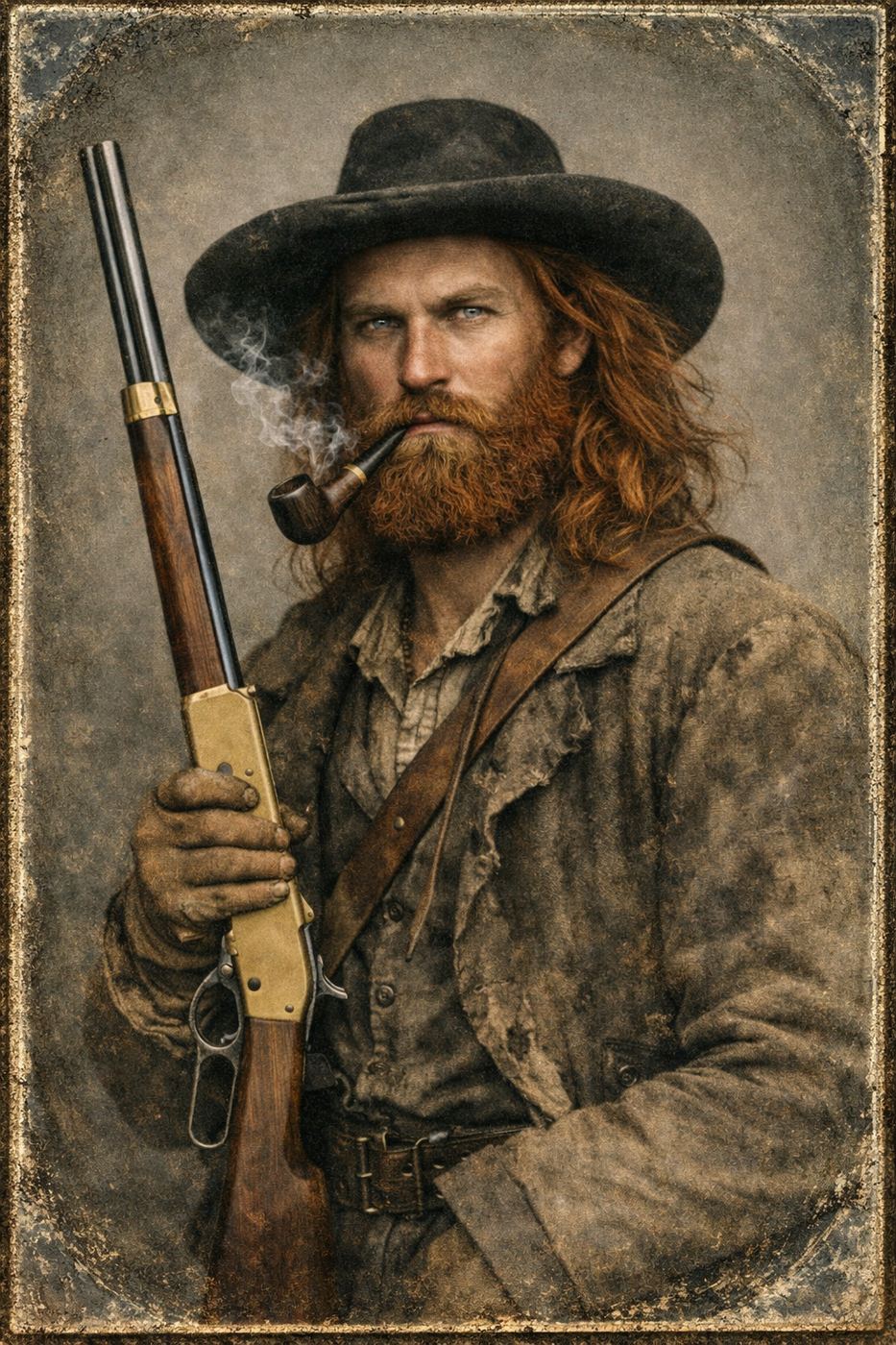
William "Wiley Bill" — young outlaw, holding a Model 1866 Winchester. Circa 1879.
A Western Story Based on True Events
The life and mysteries of William Martin Wiley
Polk County, Arkansas • Franklin County, Texas • 1848 – 1930
"There is a photograph of him. Two, actually. In the first he is young, with wild red hair and a beard the color of autumn leaves. In the second he is old. The red hair has gone white and long. The rifle is still there. The pipe is still there. But the eyes have changed. They have seen too much and given away nothing." — William Martin Wiley, known as Wiley Bill · c.1848 – April 5, 1930
Part One
April 5, 1879
William "Wiley Bill" — young outlaw, holding a Model 1866 Winchester. Circa 1879.
The new Franklin County jail stood north of the public square like a promise the county had made to itself. It was solid. It was strong. Sheriff Joe Templeton was proud of it. He had filled it quickly — a set of bad characters had overrun this part of Texas and the adjoining counties, and Templeton had made it his business to put as many of them behind its walls as he could.
On the evening of April 5, it was nearly dusk when the men broke for supper. Templeton thought it too early to expect trouble. He was wrong.
Before he left, he asked a young man named Robert Morgan to keep watch. Morgan was barely twenty four years old, a friendly face around town, not yet a lawman in any official sense. Templeton handed him a shotgun and a six shooter, deputized him on the spot, and walked south across the square toward his supper.
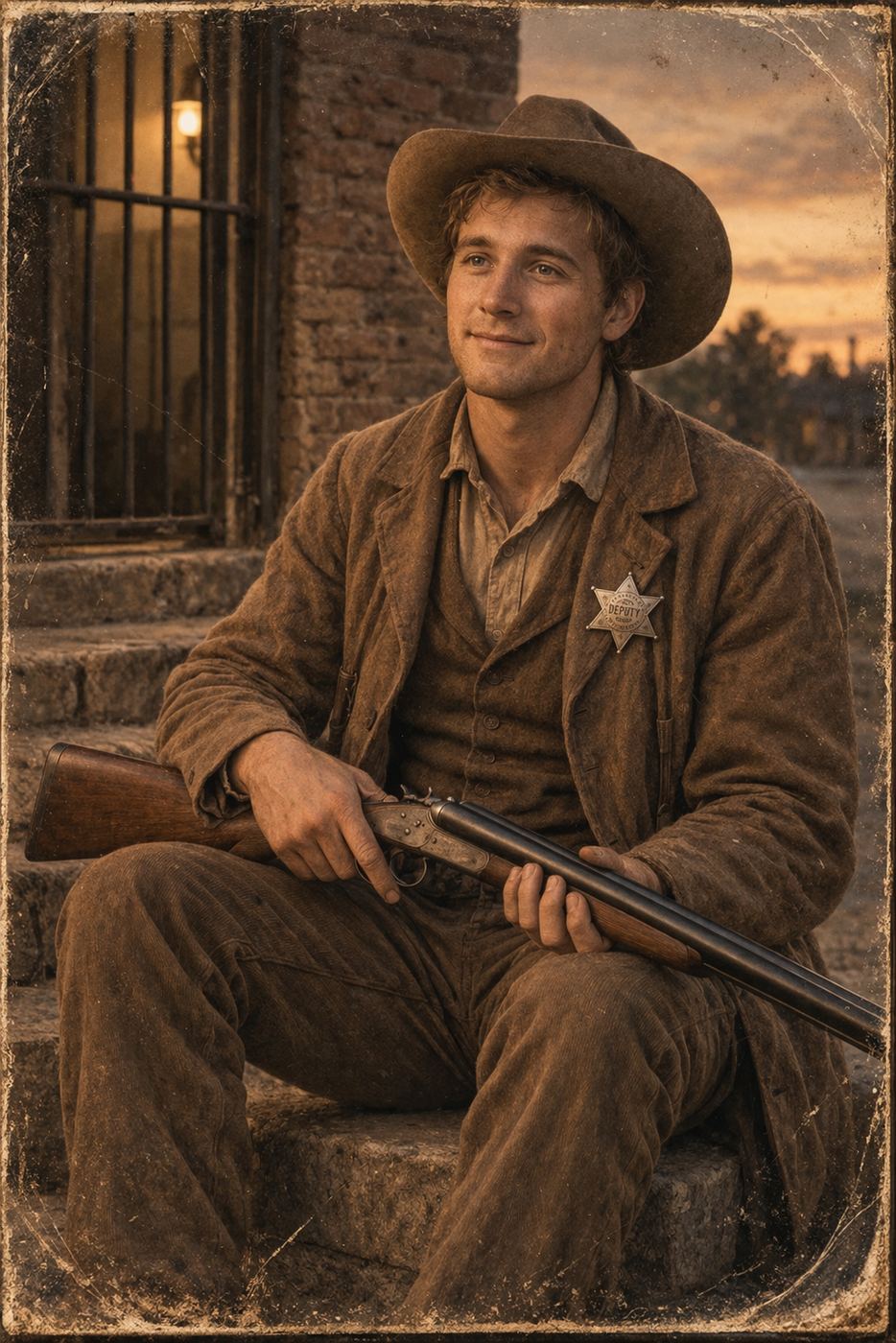
Deputy Robert Morgan — deputized just ten minutes before his death. April 5, 1879.
Morgan sat down on the steps near the stairway leading to the upper story of the jail and settled in for what he imagined would be a quiet evening. He had been sitting there approximately ten minutes when the world came apart.
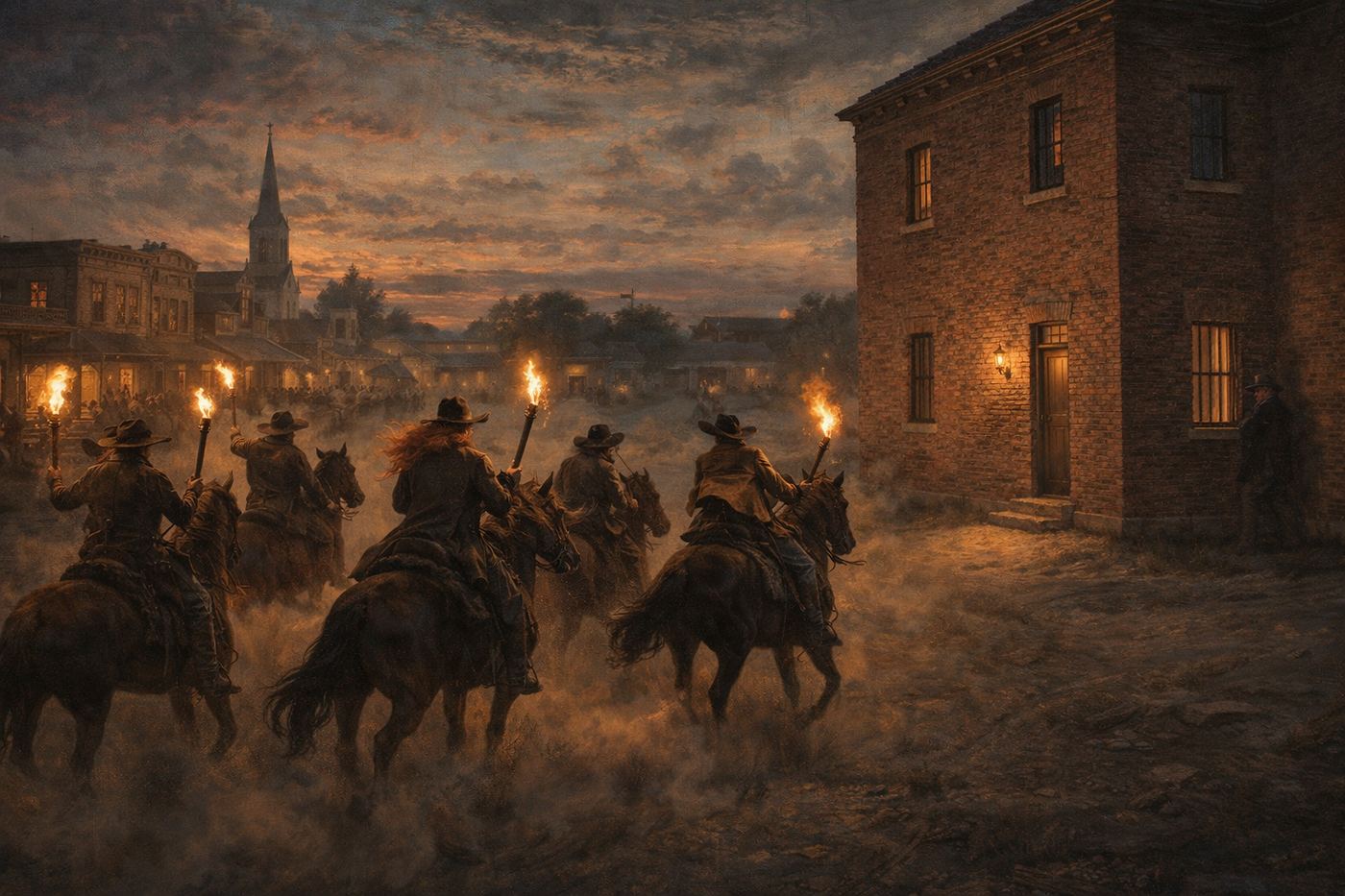
Six or seven riders bearing down on the Franklin County jail, Mount Vernon, Texas. April 5, 1879.
Two men riding out of town spotted them first — six or seven riders coming hard for the jail, Sam Wilson among them, along with Ed Murphy, Bill Bird, and others known only as John Red and Buffalo Bill. They wheeled their horses and raced back to sound the alarm, but by then the shooting had already begun.
Bill Bird came in low and quiet, slipping under cover to the side of the jail. He raised his weapon and fired once. Robert Morgan went down where he sat, shot and dying on the steps where Templeton had left him just minutes before. Morgan managed to fire back before the life went out of him — one shot that grazed Bird's scalp, close enough to part his hair. It was the last thing Robert Morgan ever did.
Riding with those men that night, somewhere in the darkness and the gunsmoke and the thunder of hooves, was a red haired young man from Texas named William Martin Wiley.
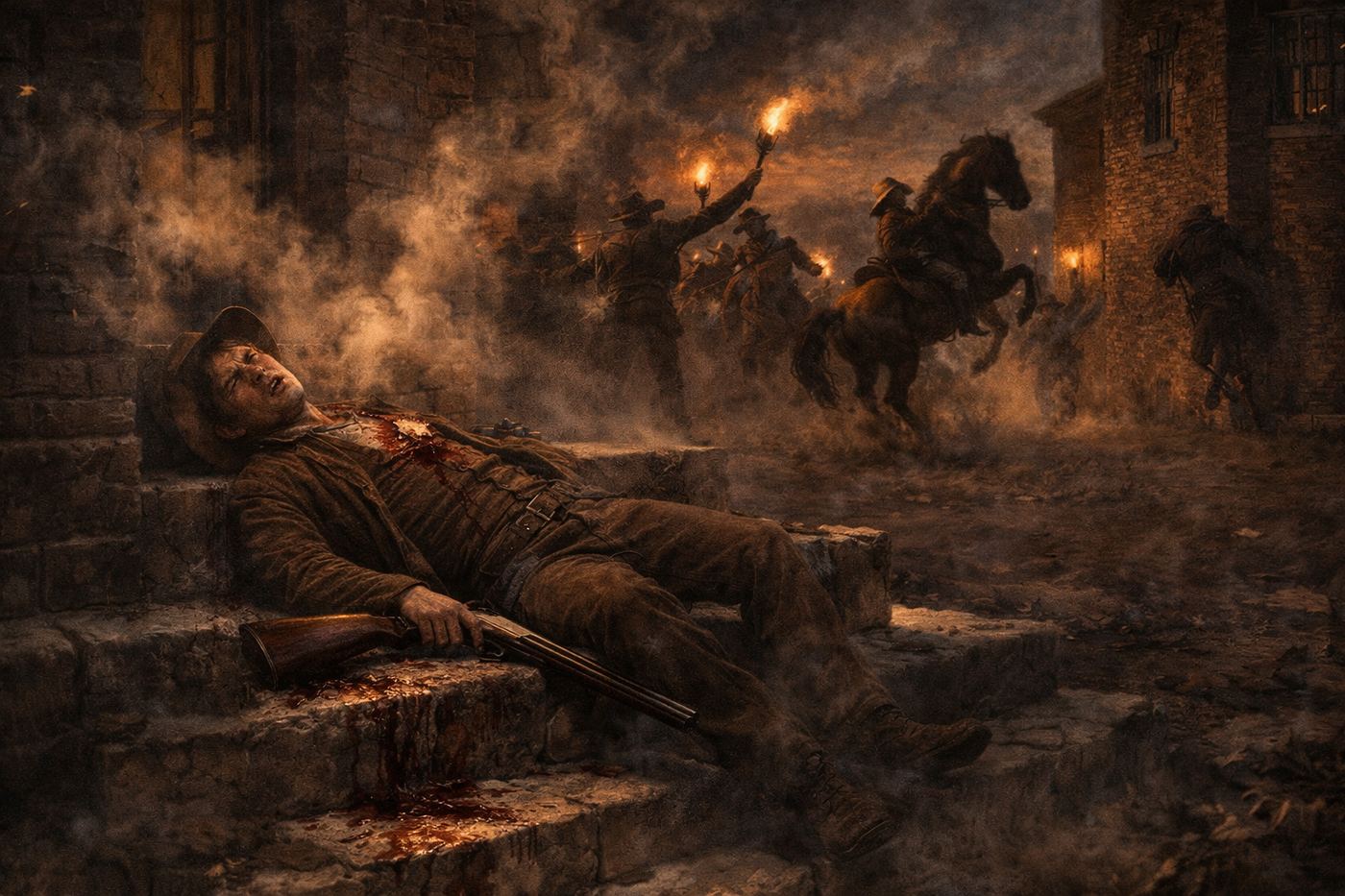
Robert Morgan falls on the jail steps as the gang flees into the night. He had been a lawman for approximately ten minutes.
Robert Morgan was carried to Rutherford's drug store, where he died within twenty minutes. He had been a lawman for approximately ten minutes. To this day, it is believed he holds the record for the shortest law enforcement career in American history.
And one — the red haired one — would ride all the way to Arkansas and disappear.
Part Two
1880
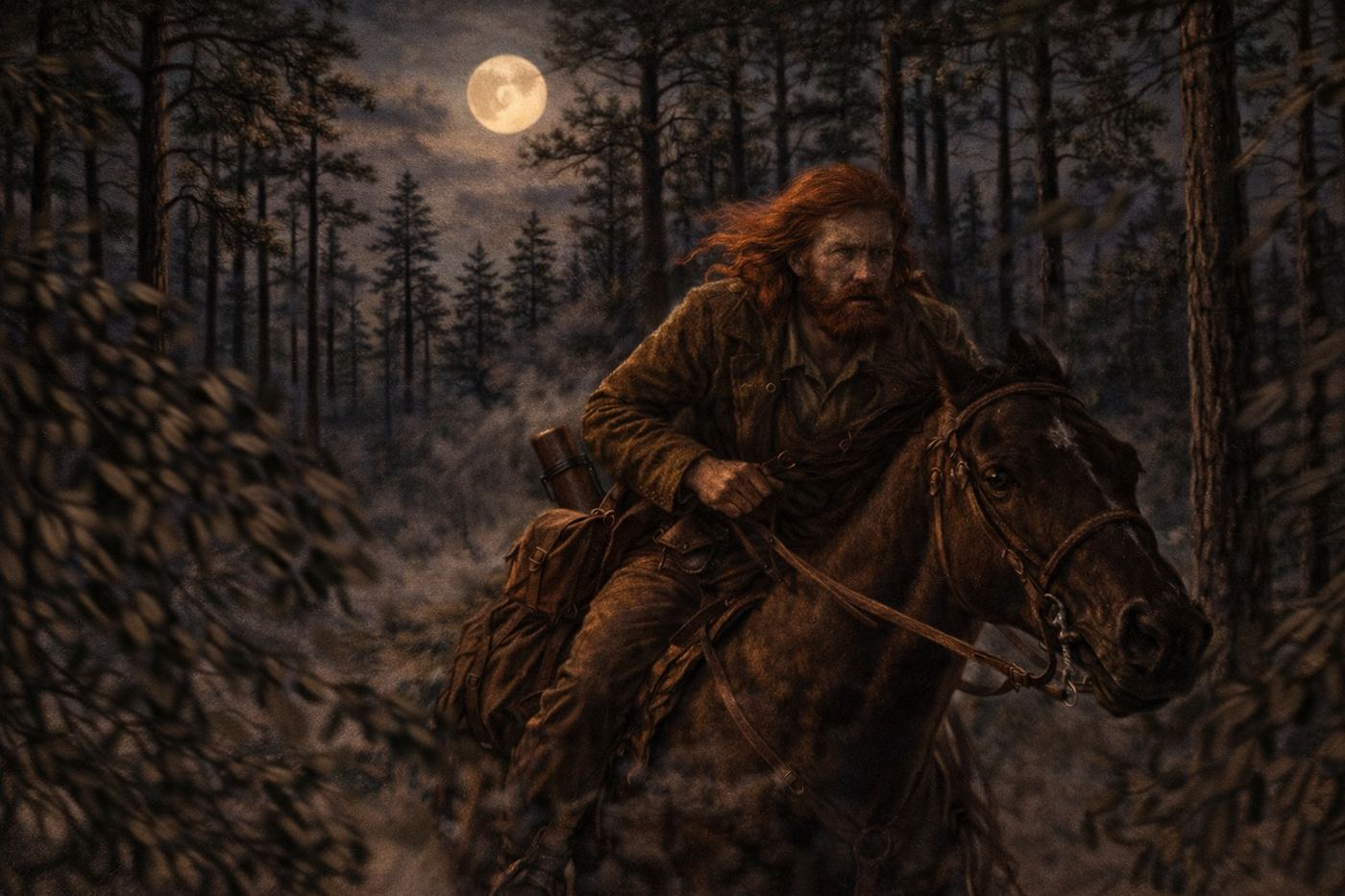
Bill Wiley rides north through the Arkansas hill country under a full moon.
He called himself Mack Allen. The name came from his uncle — a man named Allen who had raised him when his own father could not. He found work on a farmer's land. He kept to himself. He worked hard. He said little. At night, when the farmer's house had gone dark and quiet, Bill Wiley knelt beside his bedroll and prayed.
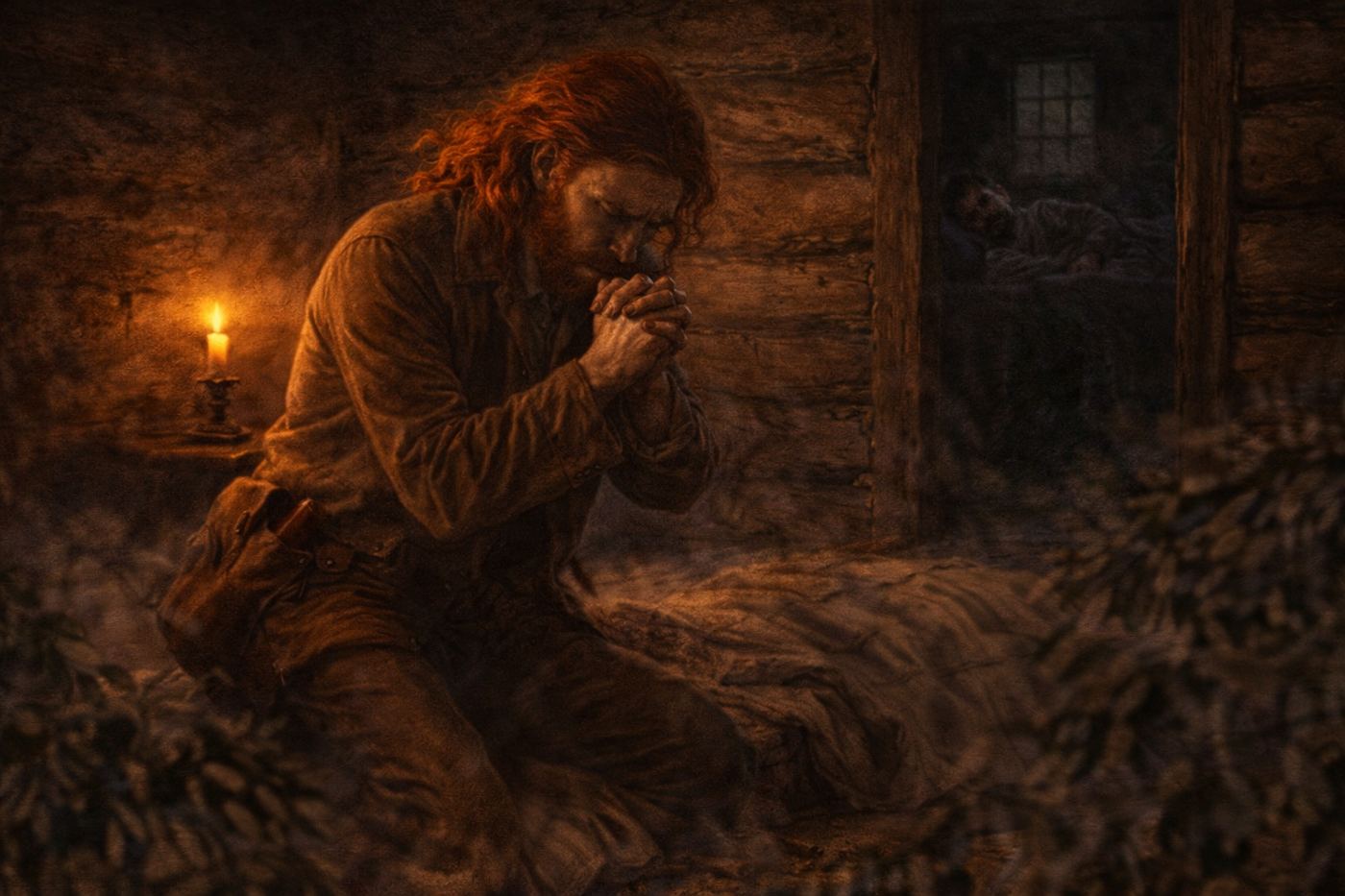
Bill prays for forgiveness — while the farmer listens from the darkness beyond the doorway.
He prayed for forgiveness. He mentioned Mount Vernon. He mentioned the things he had done there. He did not know that the farmer, lying awake in the darkness, could hear every word.
The farmer sent word to Sheriff Templeton the next morning. They came for him and took him back to Texas — to the same jail he had ridden on less than a year before.
He did not stay long.
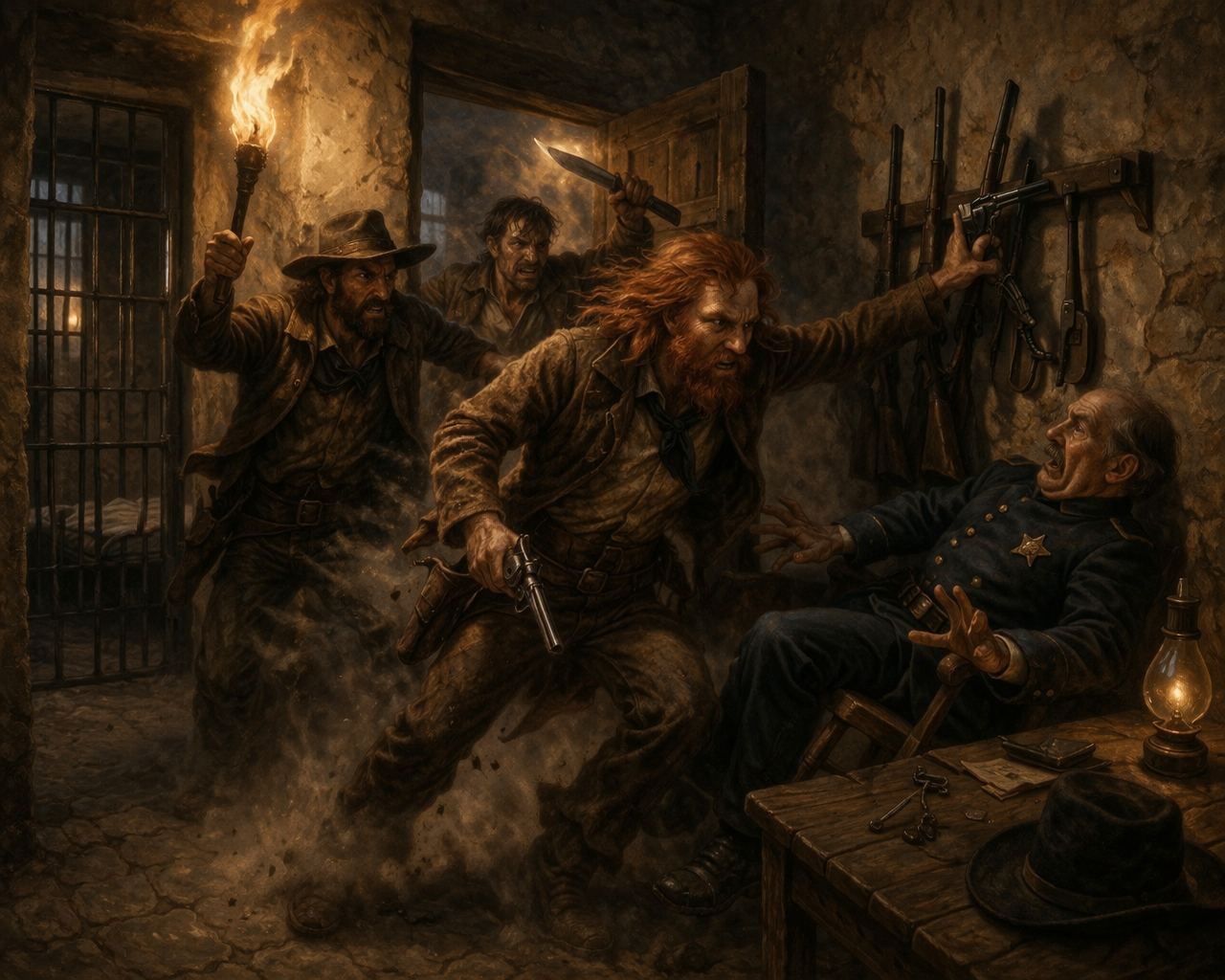
Mack Allen, Sam Kelton and Joe Hollis overpower the jailer and arm themselves in the guard room.
Together with two other prisoners — Sam Kelton and Joe Hollis — Bill Wiley pulled a jailer into their cell, armed themselves in the guard room, and walked out into the streets of Mount Vernon. But Bill Wiley was already gone — riding north again, back to Arkansas, deeper into the hills, closer to the rivers. This time for good.
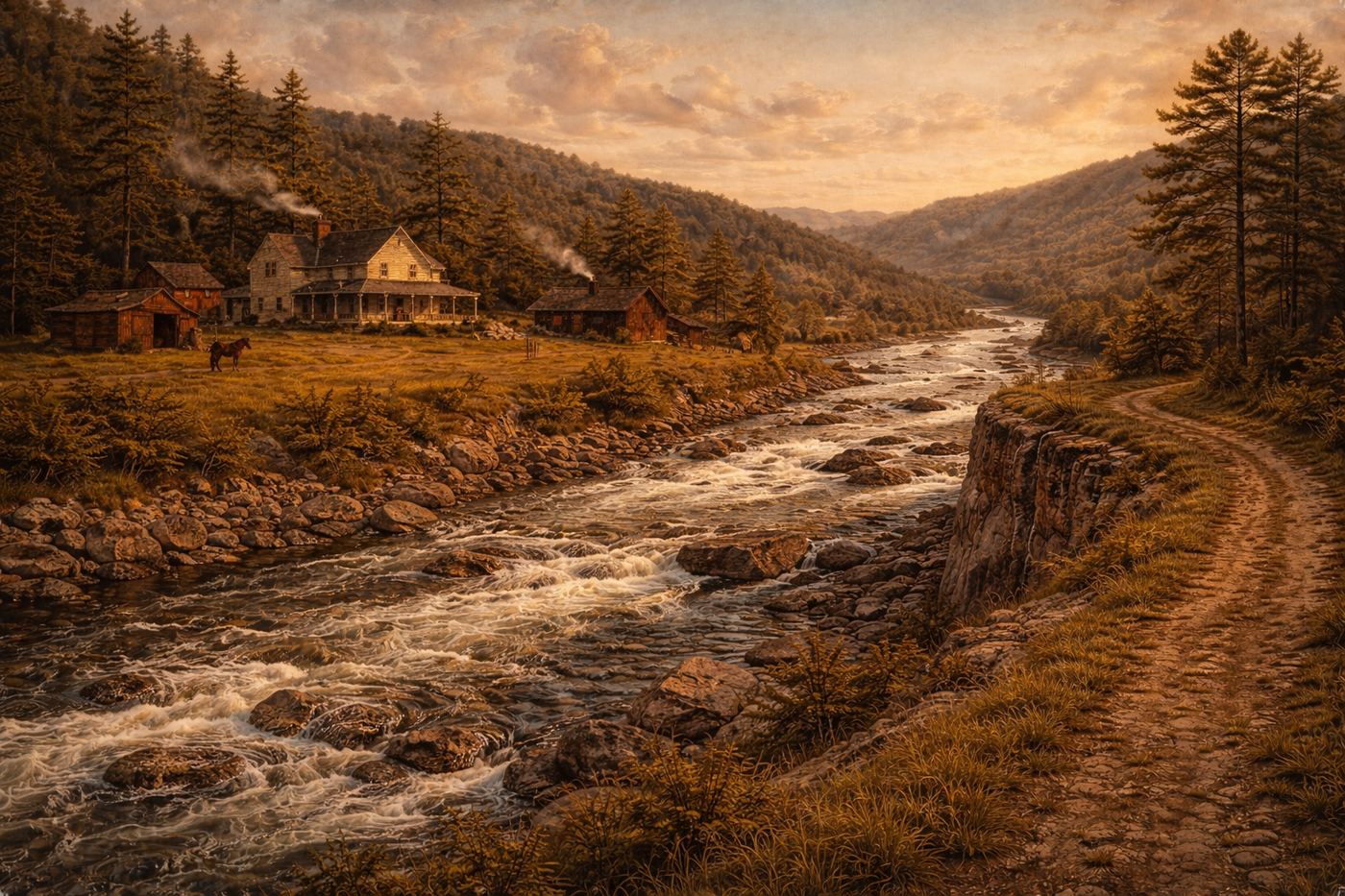
The Wiley homestead at Baby Ruth City, near Wiley Bluff on the Cossatot River, Polk County, Arkansas.
He built a nine room house — no small thing in those hills. He put up a bunkhouse, a barn and corral, a blacksmith shop. He found a spring on the property that people would later call Inspiration Spring.

Inspiration Spring — "there can be found no finer water on the planet earth."
For twenty years, Bill Wiley lived quietly. He mined silver and manganese. He farmed. He prospected. He was known as a friendly, inoffensive man. Wanted in Texas for the murder of a ten minute deputy, he built a life so ordinary that no one thought to look twice at him.
Until 1900. Until everything fell apart at once.
Part Three
1900 — 1901
Mattie died on October 17, 1900. She was thirty nine years old. The following spring, trouble came riding in from five miles east. His name was Bine Whitlatch — thirty seven years old, a married man with children, owner of one hundred sixty acres of good Arkansas land. Bine Whitlatch had taken notice of Florence Wiley. She was fourteen years old.

Bine Whitlatch draws his pistol on fourteen-year-old Florence Wiley.
What followed was a campaign of terror. Whitlatch drew a pistol on her, hid around the house watching, told her if she did not go with him by April fourth he would shoot her. On March 27, 1901, Florence went to the Justice of the Peace and made a formal complaint. She was fourteen years old and brave enough to say his name.
Whitlatch was arrested. The case was dismissed. He walked free.
Eleven days later, Florence Wiley was dead.
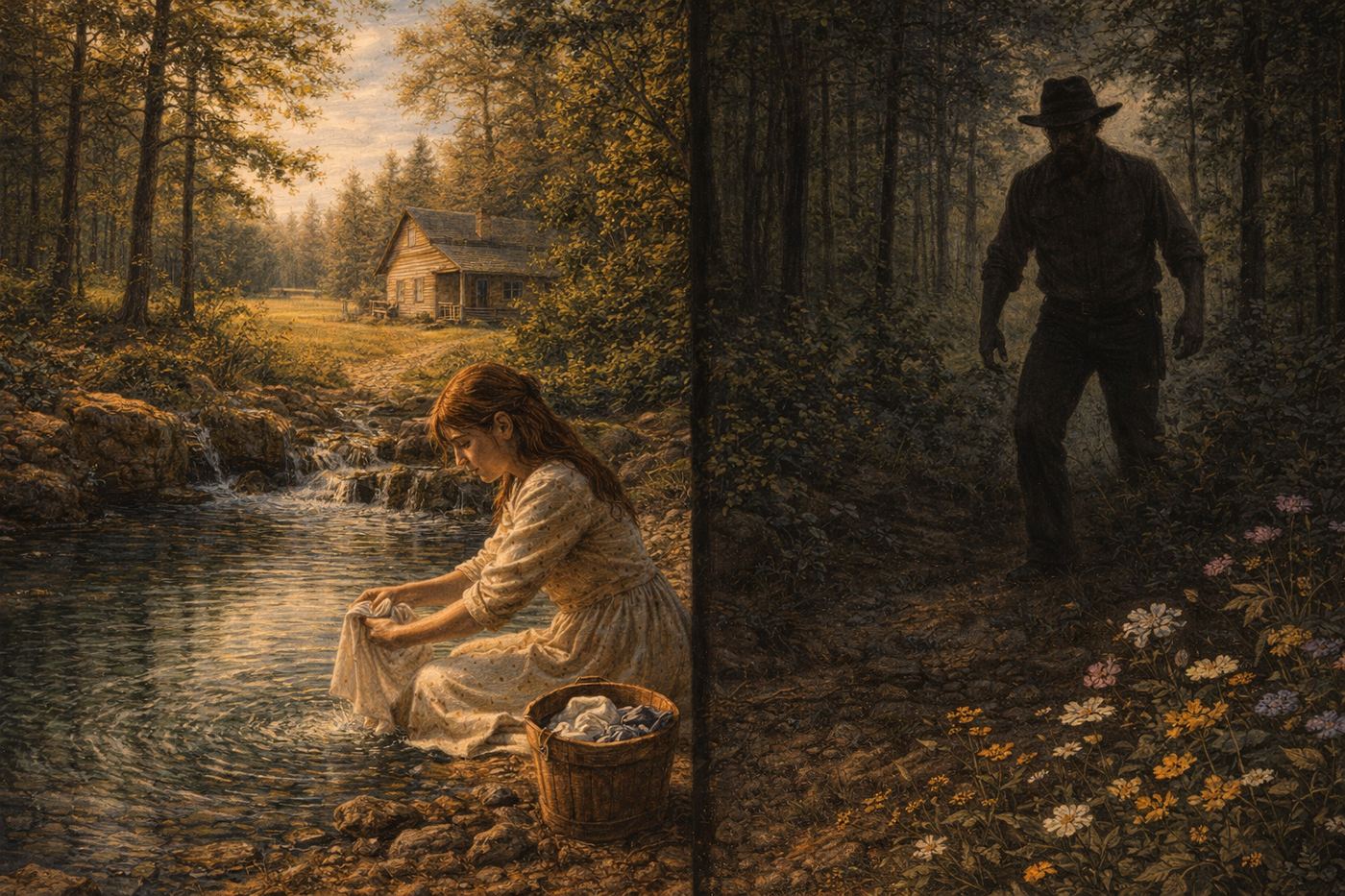
Florence at Inspiration Spring, April 15, 1901. A man emerges from the tree line behind her.
It was a Monday. Bill Wiley and his two sons were working in the field. Florence was at the spring, thirty steps from the house, washing clothes. Her sister was outside milking.
A man appeared.
He chased Florence into the house. He followed her to her room. He raised a Winchester rifle and fired once. The ball entered just below her heart and came out just below her left shoulder blade.

Florence Wiley, shot in her room at the Wiley homestead. April 15, 1901. She remained conscious for approximately two hours.
Her sister ran to find her father. Bill had come home by a different route and arrived not knowing anything was wrong until his youngest child met him at the gate with the news. He went immediately to Florence's side.
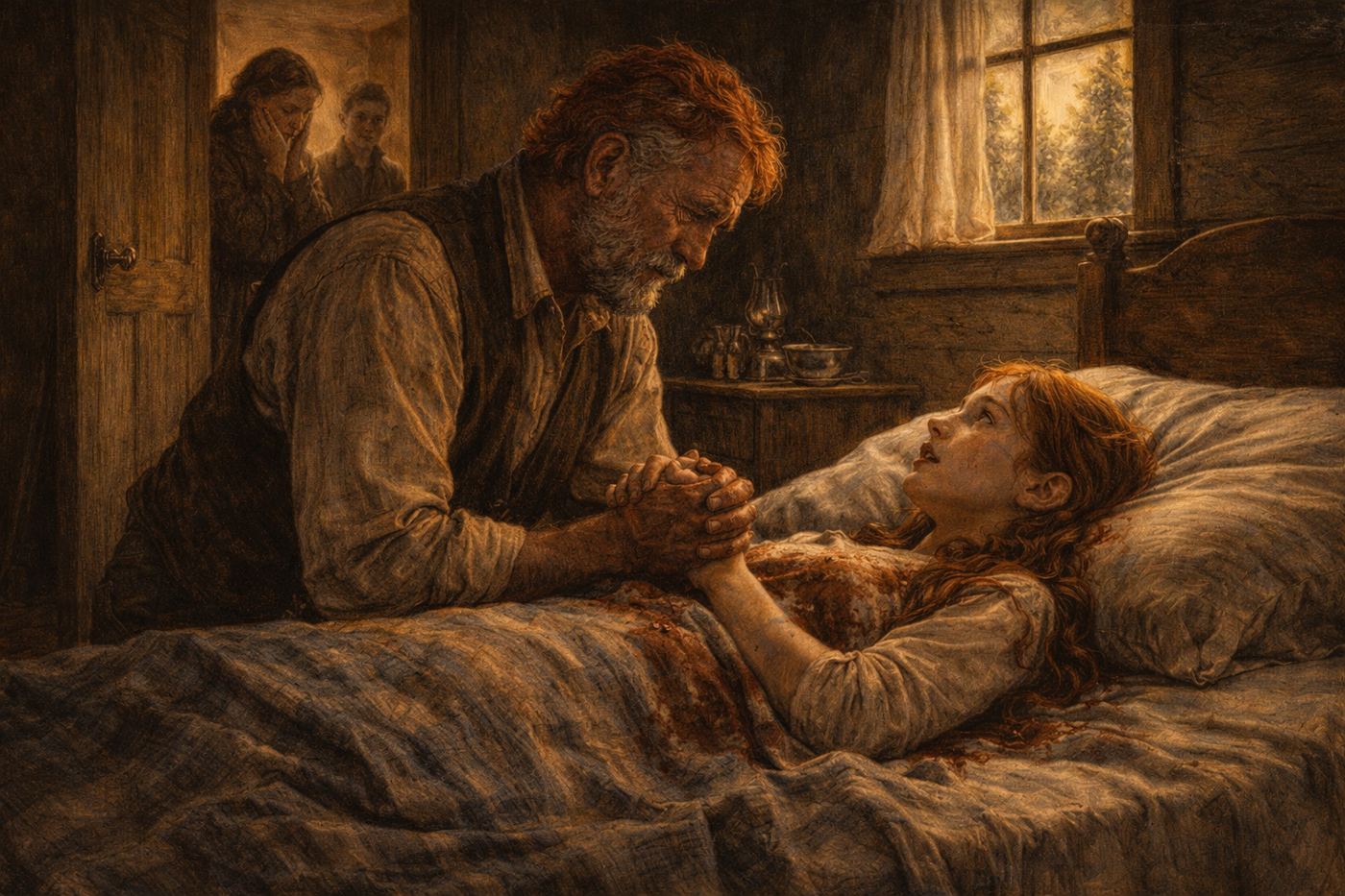
"Daddy, Bine shot me. And he'll shoot you if you step outside." — Florence Wiley's last words.
She looked up at her father and said — Daddy, Bine shot me. And he'll shoot you if you step outside.
Those were among the last words Florence Wiley spoke. She died that afternoon, fourteen years old, shot through the chest with a Winchester rifle.
Who pulled that trigger? That is the question that has never been answered.
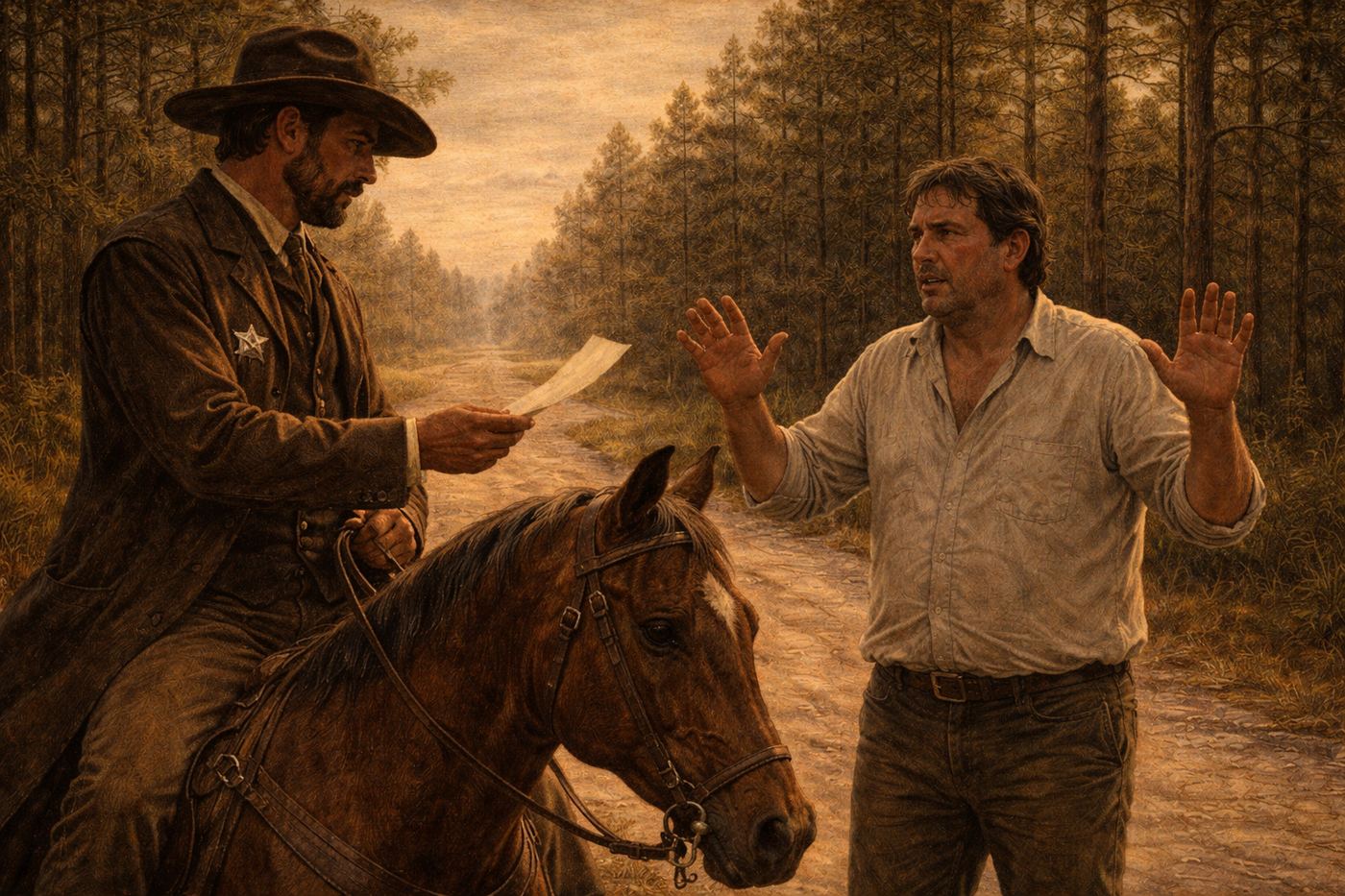
Deputy Avants reads the murder warrant to Bine Whitlatch on an Arkansas road. Whitlatch protests his innocence.
Bine Whitlatch was arrested, put through habeas corpus proceedings, and bound over to the grand jury. He was never tried. The case died quietly. Eventually he moved to Klamath Falls, Oregon, and lived out the rest of his days without ever answering for what happened at the spring near Wiley Bluff.
Part Four
June 1901
Two months after Florence died, two men rode into Polk County from Texas. One was E.P. Templeton, Sheriff of Franklin County — younger brother of the original Sheriff Joe Templeton, who had deputized Robert Morgan twenty two years before. E.P. had been nine years old when it happened. Now he was the sheriff. Now he was here. The other was C.C. Dupre, an old ex-sheriff who had been chasing this particular ghost for a long time.
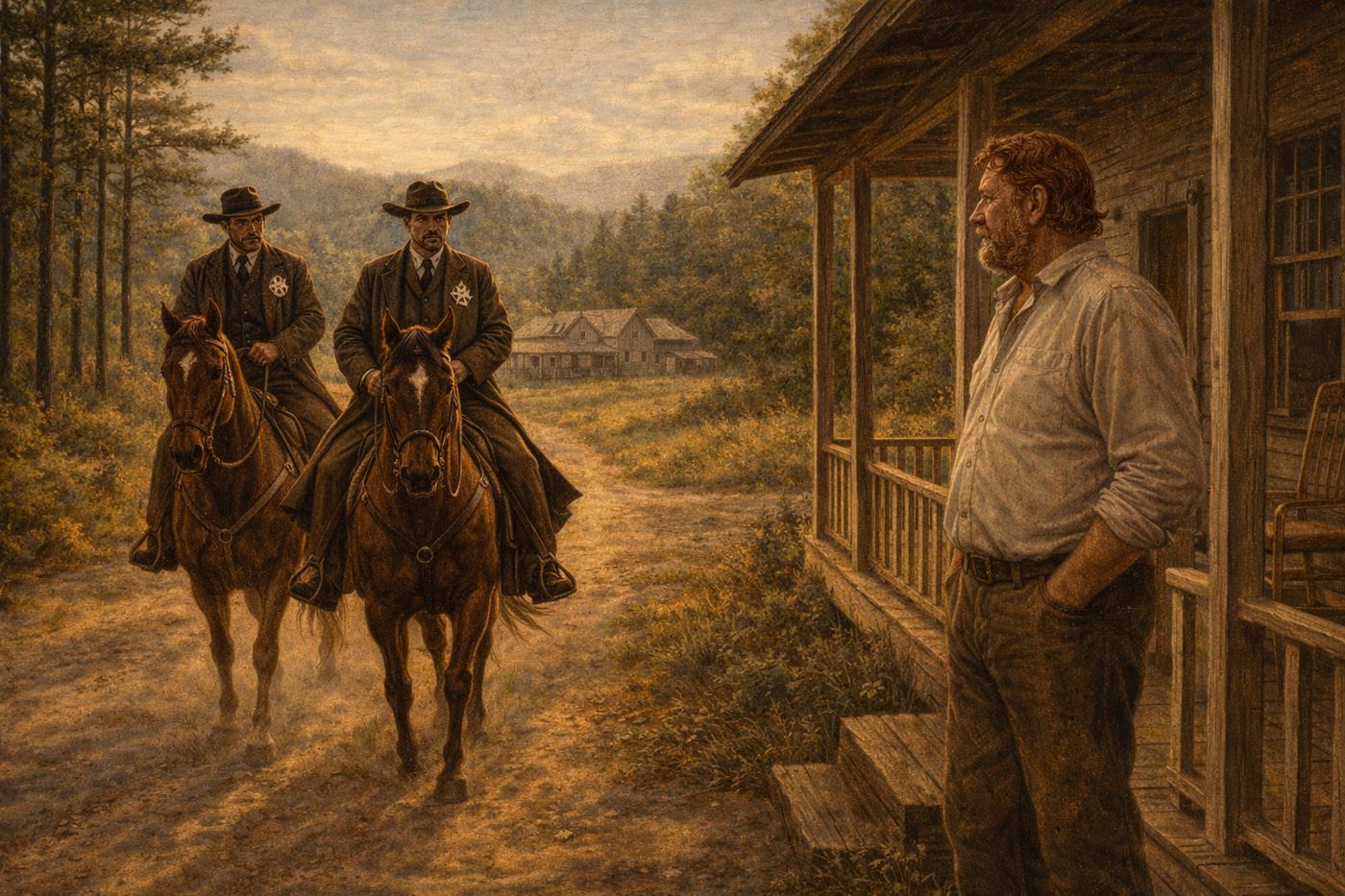
Sheriff E.P. Templeton and C.C. Dupre ride up to the Wiley farm on the Cossatot River. June 1901.
Bill Wiley went with them without argument. No requisition papers were required.
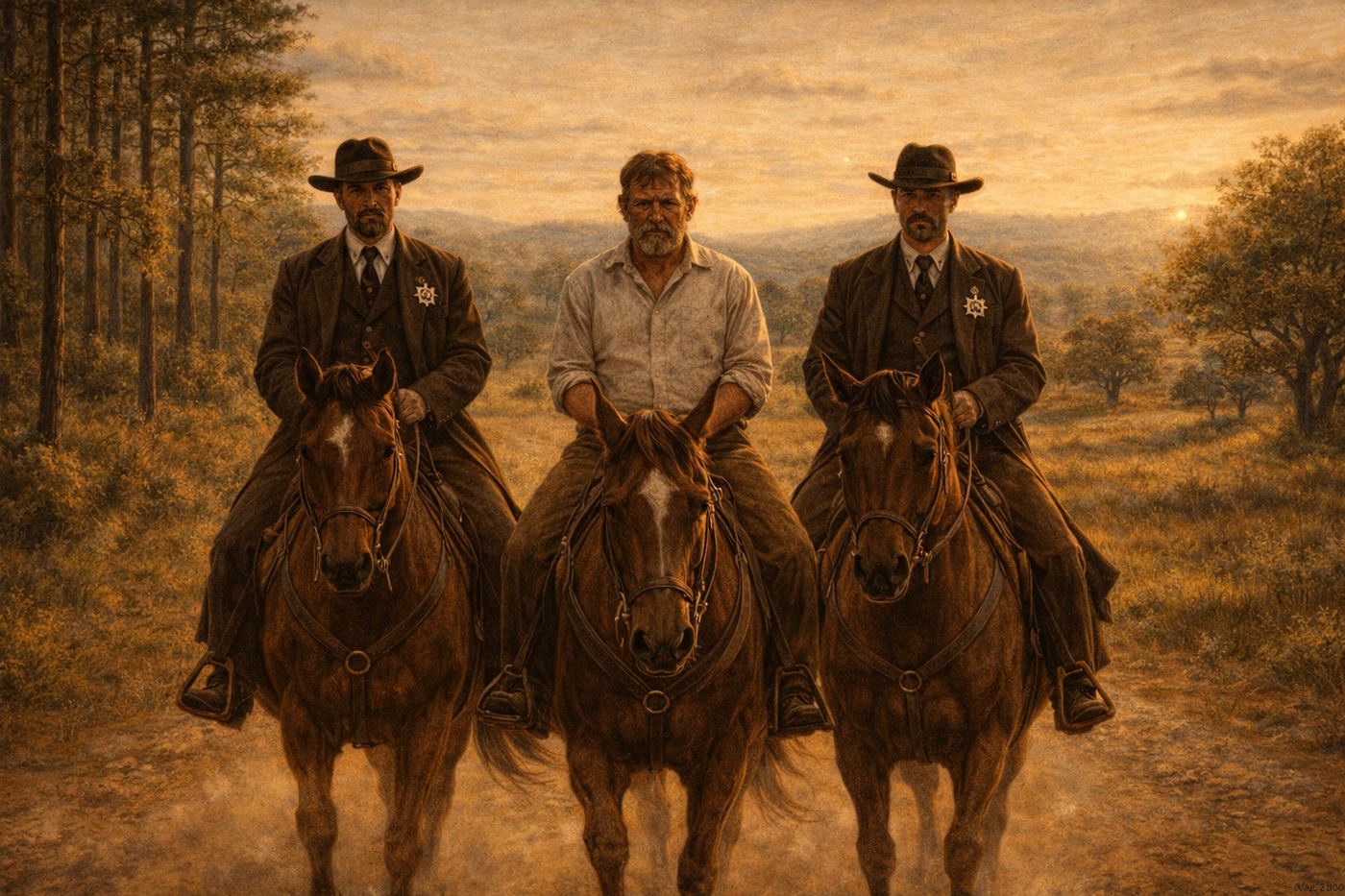
Bill Wiley rides willingly between the two lawmen toward Texas. No chains. No struggle. Just a man who has stopped running.
Was he tired of running? Was he confident he could beat it? Was he a man who had already lost everything that mattered and simply didn't care anymore? They held him in the Franklin County jail. Many thought him to be Mack Allen. Twenty two years had passed. The evidence was not enough.
Bill Wiley was released. He went home to Arkansas.
Epilogue
1902 — 1930
He married again — Julia Oretta Ward, eighteen years old, in November of 1902. He was approximately fifty four. They had children in the house near Wiley Bluff. Julia left him sometime between 1910 and 1920. She packed up the children and went to Brady, Texas — of all the places on earth, Texas — and never returned.
By 1920 he was living alone. The mining operation had wound down. The bunkhouse stood empty. Florence was in the ground. Mattie was in the ground. The men he had ridden with in 1879 were dead or scattered.
Just Bill. And the spring. And the hills.
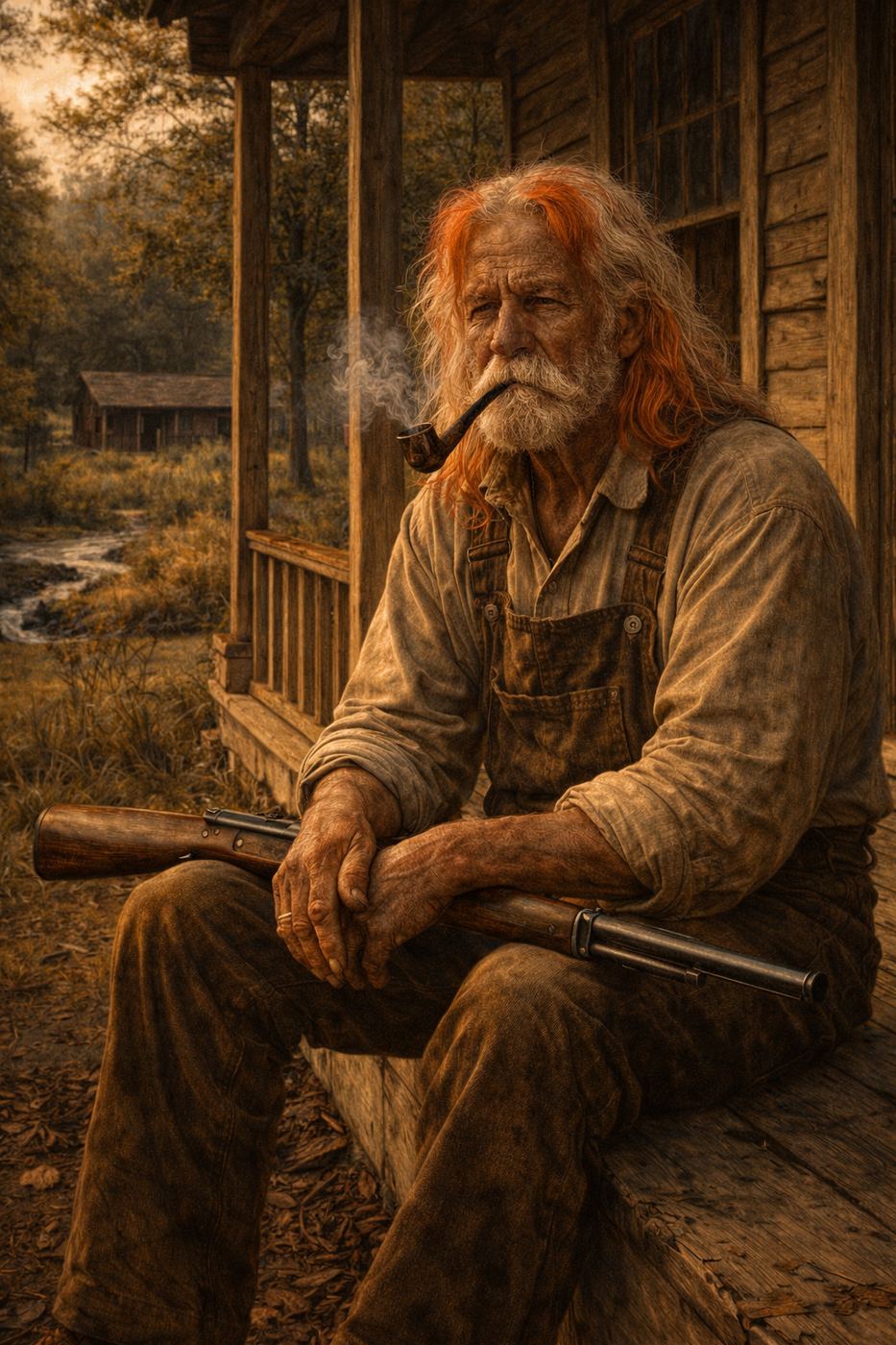
Bill Wiley alone on the porch of the Wiley homestead in his final years. The pipe still lit. The rifle still near. The Cossatot still running behind him.
He died on April 5, 1930, at Board Camp in Polk County, Arkansas — about twenty five miles north of the Cossatot River homestead where he had spent his life. The cause of death was listed as dropsy. The doctor noted his birth year as unknown. Even his age was a mystery. With Bill Wiley, it was sometimes hard to tell the difference between a mystery and a lie.
Florence was already in the ground near Wiley Bluff, fourteen years old forever. On her gravestone, the family carved their verdict — the verdict the law could never deliver:
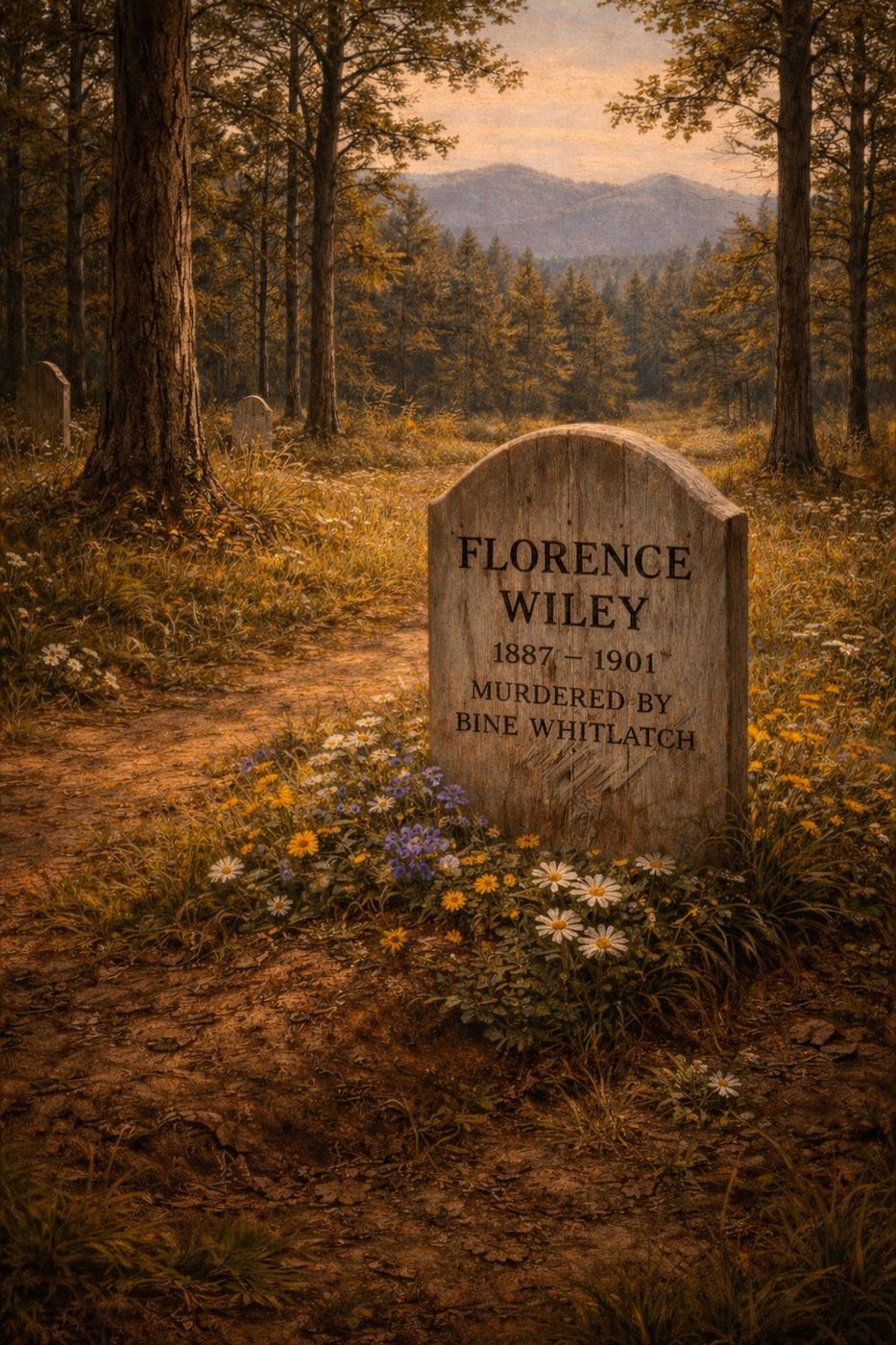
The grave of Florence Wiley, Polk County, Arkansas. The family's verdict, carved in wood for all time.
Whatever secrets of life he possessed, they went with him.
The Real Man
Authentic photographs, colorized
These are actual photographs of the real William Martin Wiley — Wiley Bill himself. The man in these images lived every event described in this story. He rode on that jail in 1879. He knelt in that Arkansas farmhouse and prayed loud enough for a stranger to hear. He stood on that porch and watched the Texas lawmen ride up. He buried his daughter near the spring.
The photographs have been colorized from the originals. The red hair is real.
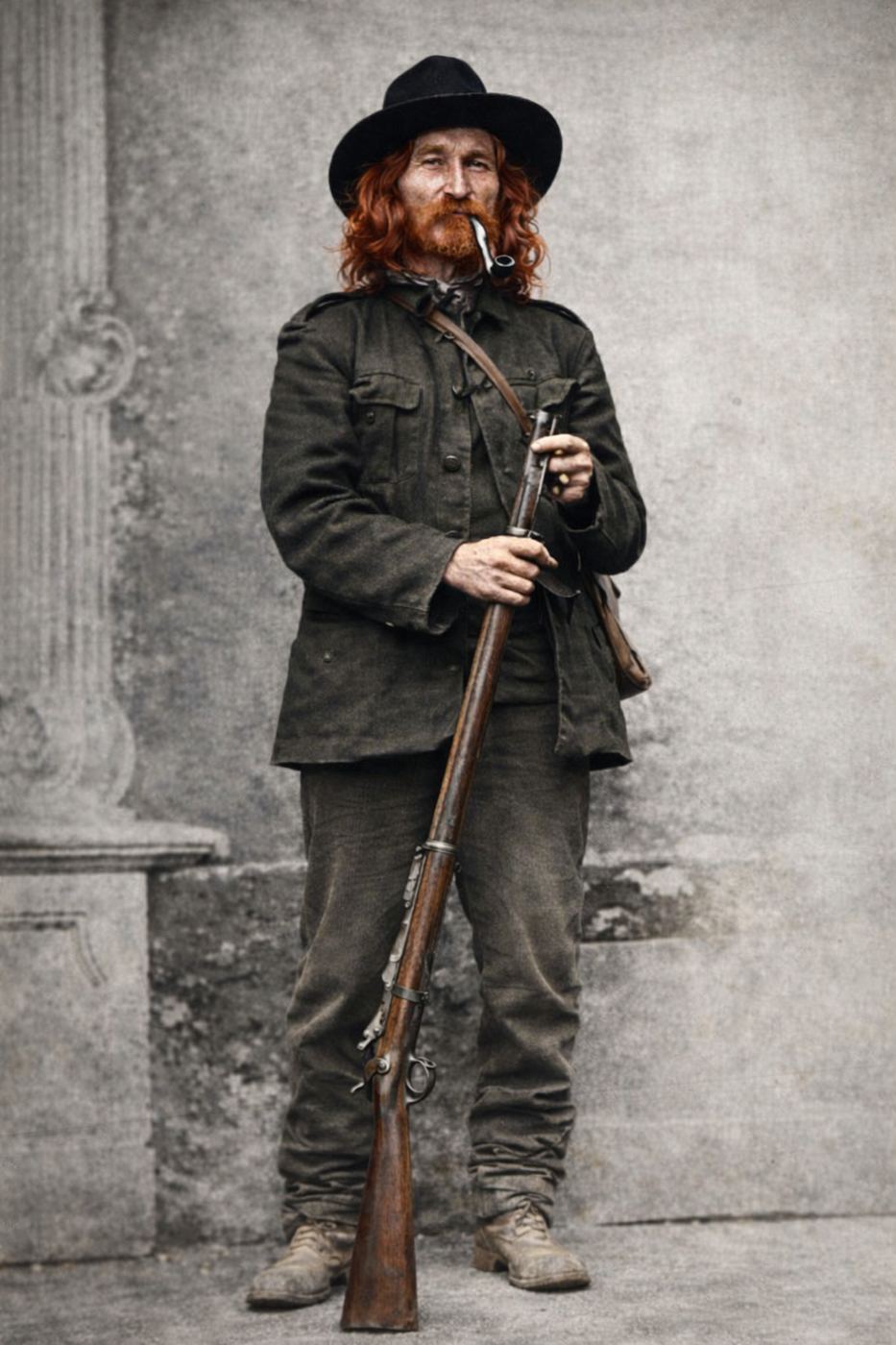
The young William Martin Wiley — this is the real man, the actual outlaw. Photograph colorized from original.

Old Wiley Bill in his final years. This is the real man who built a life on the Cossatot River and carried his secrets to the grave. Photograph colorized from original.
This story is based on true events documented in census records, newspaper accounts, court records, birth and death certificates, and family oral history passed down through generations.
The identity of Florence Wiley's killer has never been established. No one was ever convicted of her murder.
Illustrations generated with AI based on historical research. Photographs of William "Bill" Wiley are authentic period images, colorized.